Showing posts with label Review. Show all posts

Wednesday, 6 July 2016

Morbid Angel: Illud Divinum Insanus – Is it Really that Bad?

Hello again internet! I know it's been an age since I last graced the international blogosphere with my presence, but you'll be pleased to know I'm not dead.

Instead I have been away in the cruel and lonely world of academia, finishing off my studies. These included a poetry portfolio - some of which I might post here later on - and a 12,000 word dissertation on the changing face of the global Metal culture. These included the role of women, racism, homophobia, etc.

But to recharge my place in the international blogosphere, I thought I'd publish here my thoughts on one of the most hated Death Metal albums of recent history.

Ladies and gentlemen and third gender, I give you my thoughts on Morbid Angel's Illud Divinum Insanus.
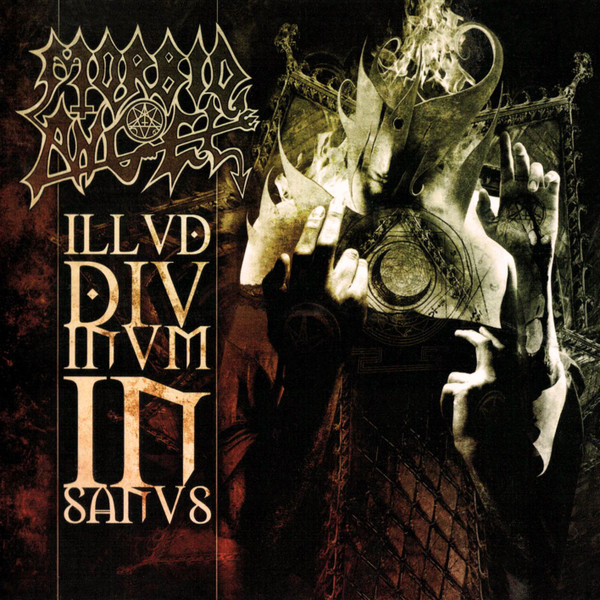


June 2016 marks the fifth anniversary of American Death Metal band Morbid Angel’s eighth studio album Illud Divinum Insanus (Divine Crazy). This album received mixed to lukewarm reviews from the press, but I as a fan of the band, can recall the hefty backlash of angry fans who felt their beloved Death Metal veterans had betrayed their musical roots and had delivered what some have gone as far as calling: ‘mandatory suicide.’

Seeing as how it’s been five long years with no new material since, I think it’s time to see if this album has stood the test of time and ask: is it really that bad? 

A Brief History

Before I delve into the album I’ll just give a brief history of the group. 

Formed in Tampa in 1984, Morbid Angel is one of the earliest Death Metal bands who pioneered the genre at the beginning of the 1990s. Along with fellow Florida bands Death, Deicide and Obituary, their use of growled vocals, down tuned guitars, complex rhythm and string structures and focus on blasphemous and occultist lyrical themes; gave birth to what is deemed the most extreme Heavy Metal genre by many.


Illud Divinum Insanus

The first thing you notice about this album is that it’s experimental. You begin by hearing some eeriness that reminds you of cheap b-movie horrors which the band must have used as influences, but soon you hear some odd bass and drum programming that has lashings of Industrial music to it. 

But eventually the tracks begin to drag with first vocal driven track ‘Too Extreme’ annoying the listener with what sounds like a DJ scratching some vinyl over some double bass pedals which you can tell aren’t being played by human feet. Every now and again you hear some guitars reminding you of Morbid Angel in their recent days but the song drags and goes on for too long making you want to turn it off – not the best of starts.

Then you’re subjected to ‘Existo Vulgore’ which sounds a little more like the band you came to listen to. Morbid Angel laid some of the cornerstones of Death Metal so they’re not technical in nature and instead play basic extremes of guitars and drums. This track and next one ‘Blades for Baal’ would make any keen Death Metal listener think of this American classic act. 

David Vincent - Divinely & Utterly Crazy
However, the biggest let down of this entire album is vocalist David Vincent. He’s  known for his death growl vocals which have aided in making classic Morbid Angel albums: Covenant, Altars of Madness and Blessed Are The Sick, bestsellers in the Death Metal canon – but here it feels like he’s trying to ‘speak-growl’ not be as brutal as possible. There are even places where he sounds like he’s rapping, especially on track ‘I Am Morbid’ – something I can only see as an attempt at the band formulating a new battle cry for fans at live shows. Seriously, that track sounds like a football chant by how it opens with clapping and crowd like yells of the word ‘morbid.’

So overall, I can sympathise with anyone who called this album weak or terrible when they heard it. I for one had to turn it off several times and took the best part of two days to listen through it when writing this piece. But am I going to slag off the band and say it’s time to call it quits after 32 years on the road? Well no, I am not. In fact I’m going to talk about what made this album such a bad thing for the band – not the musical failures but the fans being atrociously immature.

Experimenting and Elitism

So what we have here in summary is an experimental album. An experiment that’s gone horribly wrong. From how fans reacted to this album, it does make me ask: have you never heard of a band experimenting before? Has everyone forgotten about Thrash Metal veterans Kreator flirting with Gothic and Industrial music throughout the nineties?


However, it does appear that this is the first experimental album from one of the major Death Metal bands – I cannot recall others like Obituary, Cannibal Corpse or Deicide blending something radical into their output. I think this is one thing that’s led to me distancing myself from the genre in recent years – other such genres like Black Metal seem a bit more open to bands taking a risky step and going on some audible adventure.
Though what angered me most about this album was how some fans even had the nerve to create Facebook groups like ‘RIP Morbid Angel and go as far as saying they’re ‘traitors’ when commenting on the songs on YouTube.

How I feel about Morbid Angel was best summed up by YouTube blogger Ed Veter (InfidelAmsterdam) ‘Compare it with a good friend. They’ve been doing the same thing you do and then make a choice after so many years, which you do not agree with. Are you putting away your entire friendship just because he or she made a decision that doesn’t really affect you?’


Please do remember all you fellow Morbid Angel fans reading this, I despised this album as much as you, but what is most important to a band and the culture of the music is how the fans behave and I do feel metal is changing in attitude. But please, the next time your favourite group makes a terrifying record like this one – just remember the band did what they wanted to do and you can’t control all of that. 

Plus, they’ll still be playing the music you love at the live shows like I’ve seen in recent years. We just need to understand that being so elitist about what our favourite bands do and don’t do, makes all us metalheads look like the immature, vicious, obnoxious people the outside world is so quick to paint us as.

Tipper Gore - Just one of many people trying to silence Metal and paint us all as stupid. Don't give in to the censors.


Thursday, 17 July 2014

Film Reviews: Inclusion of the Bechdel Test


If you’ve read most of my posts up until now, you might have noticed two things I focus on a lot: gender and feminism.

I am also a huge film and TV fan, and even though I haven’t reviewed that many films on here, I have devised a very small difference to my way of reviewing films. That is the inclusion of the film’s Bechdel Test Results!

What’s that? I hear you ask.

Well, the Bechdel Test is a test created by American cartoonist Alison Bechdel. It examines the portrayal of women in film. It asks whether or not the female characters play a sufficient role in the progress of the movie’s plot, or are they just secondary characters, damsels in distress or simply eye candy?

In order for the film to pass the test, it must meet these four basic guidelines:


1.      Does the film have at least 2 female characters?

2.     Do they have names?

      3.     Do they talk to each other?

4.    And do they talk about something other than men?
 

Now don’t get me wrong, if a film fails this test it doesn’t mean the film is bad – it just goes to show how far the film industry, particularly Hollywood, has to go in making realistic and believable representations of women in film.

Interestingly, the film I reviewed here, Thor: The Dark World, passed the test very slightly. You will be amazed at how few mainstream films pass this test.

From consulting the films I rank as my favourites on Facebook, here are the ones which pass:


The Crow (1993)


Mulholland Drive (2001)


Princess Mononoke (1997)


Spirited Away (2001)


Return to Oz (1985)


Black Swan (2010)


Carrie (1976)


The Breakfast Club (1985)


And to show just how astronomical the number of films that fail this test is, I’ll leave Anita Sarkeesian to tell us that.


Monday, 10 February 2014

Book Review: The Disaster Artist: My Life Inside The Room, The Greatest Bad Movie Ever Made by Greg Sestero. Part 1: The Life and Times of Greg and Tommy


(Warning: Spoilers)!

We all have those favourite bad movies which have to be so bad they are incredibly entertaining. For me, it was Troll 2 that sat there on the pedestal of greatest bad movie, until I watched Doug Walker’s 2010 review of The Room.

Holy friggin’ god was this film entertainingly bad. A protagonist played by the writer, producer and director who couldn’t act, and a plot with so many holes there was next to none of it. not to mention all those memorable catchphrases that’ll stick in my head forever and a script so diabolically written you could predict it by the time you’d reached that halfway point on first viewing.

I won’t ramble on about the film too much because you’ve probably seen it already and know exactly what is to come in this review of such a well written memoir of such a terrible movie. The author, Greg Sestero, co-starred alongside Tommy Wiseau as Mark, the protagonist, Johnny’s best friend who is sleeping with Johnny’s future wife, Lisa.

And because there is so much to cover, this review is going to be in several posts. The first will follow the sub-plot on how Greg met Tommy and the worst movie ever was conceived and brought to fruition. 

So let’s dive right into: The Disaster Artist: My Life Inside The Room.

Where did it all begin?

Sestero starts by recalling the last night out with Wiseau before shooting began. He tells how Tommy is a manipulative little bastard who will use all in his power to get an exclusive table in a Hollywood restaurant without a reservation. Greg explains how he was originally the line producer on The Room and never intended to act in it as his acting career had all but dried up by 2002, but Tommy offered him the role of Mark for a ‘life changing’ amount of money and a new car, which at his then girlfriend’s approval got him involved.

Every even numbered chapter in this book tells of how Greg and Tommy got together and became involved in each other’s lives before making The Room. Our hero then explains how he came to be part of a San Francisco drama group in the late 90s where he came across the weirdly accented, long haired man who had the appearance and swagger of ‘a slouchy teenager in detention’. Eventually, Tommy gets the chance to act and how he destroyed a Shakespearian sonnet with such elegance, mesmerised young Greg and led to the duo performing their first scene together.


What did they get up to?

Other points Greg makes about Tommy, is he owns a Mercedes-Benz, has his own retail business, complete with cards, and is obsessed with James Dean. A later chapter has the duo venturing out to Cholame, California where the rebel without a cause met his end; they even speak to one of the last men to see him alive, supposedly inspiring Tommy to get more involved with acting and produce his own movie.


Sestero then goes back even further, explaining how he became a model and landed several deals in France, owing to his ability to speak French, before coming back to America to get involved with acting. His parents do not approve and he gets several roles as an extra, including the God-awful Patch Adams before finding an agent who starts getting him places.

Tommy then lets Greg rent out his own apartment in LA and soon Greg finds his first major movie role: the ‘puppet master’ in direct-to-DVD horror, Retro Puppet Master. Along the way, we find out that Tommy is growing jealous of Greg and wants to get his own movie roles. Greg, already amazed at how this socially awkward man who won’t even reveal how he came by so much money or where he came from, is uneasy about this but eventually grows accustomed to his friend’s surrealism. Eventually, Tommy moves in with Greg in the LA apartment and before you know it, Tommy is typing away on the script for the worst movie ever made.


Most memorable moments?

Regardless of how much Sestero spills to the outside world in this memoir, The Room is still shrouded in enough mystery to rival a 19th century gothic novel. You certainly feel uneasy when Greg tells of the riches Mr Wiseau possesses buy will never, ever reveal where he came into his fortune. He does later give an account of how he came to America and how he might have become such a rich man, but there is always doubt clouding everything our hero has noted.

There’s a very weird point just before Tommy moves in with Greg, where the long haired loner vanished for nine months, leaving our hero to get his life back on track before The Room was typed up into a stage play. Vampires are constantly alluded to when Tommy moves in with Greg and how he only seems to come out at night to get high on  Red Bull and amaze the world with his personified surrealism.

All in all, you’ll be reading this book and asking yourself, ‘What The Fuck?’ more times than you can possibly imagine. The life of Tommy Wiseau and the poor young San Francisco kid whom he dragged into it will have you laughing ‘til you puke, and make your jaw drop enough times to have it dislocate itself.


Stay tuned for the next instalment, where I shall be reviewing Sestero’s memories of how the greatest bad movie was filmed. 


Yes, what a story, Mark!